

Alameda County Spousal Support
Strategic Advocacy That Delivers Results
Spousal support changes lives. It reshapes income. It determines stability after separation. In Alameda County, judges examine numbers with care and expect precision from counsel. Preparation wins cases. Strategy controls outcomes.
Warren Major LLP stands in court ready. The firm handles Alameda County spousal support matters with discipline and focus. Every filing reflects local courtroom reality. Every argument anticipates how the bench will respond. Results come from preparation, not hope.
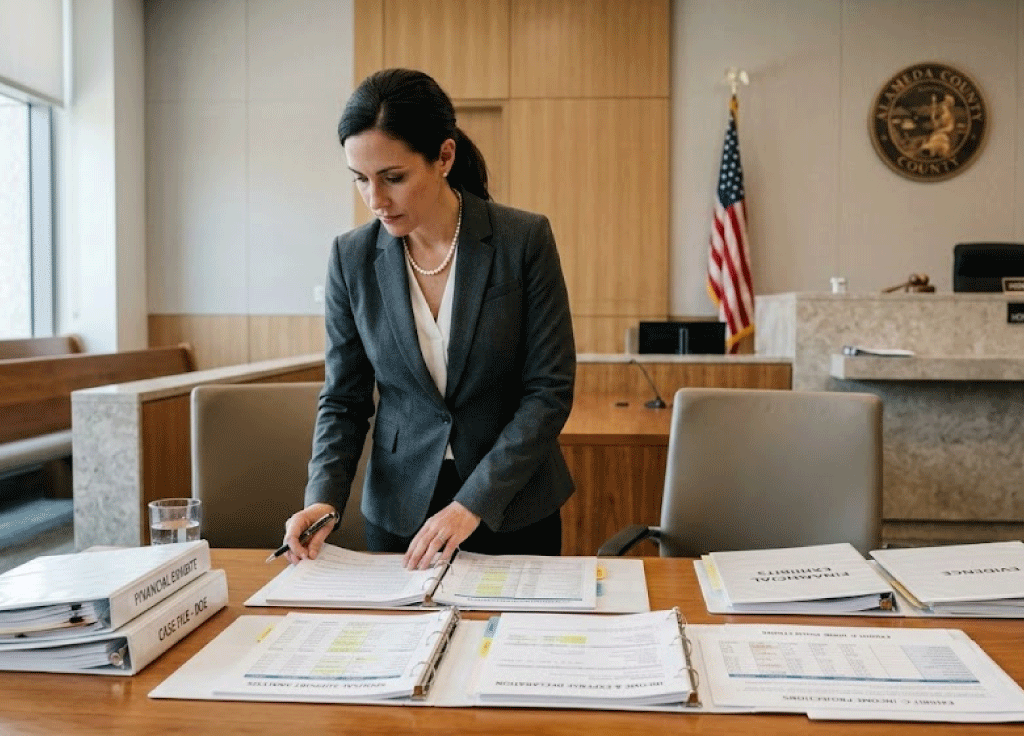

What Spousal Support Means Under California Law
California law authorizes courts to order one spouse to pay financial support to the other during or after a divorce. The Judicial Council refers to it as “spousal or partner support.” It exists to ensure fairness when one party earns significantly more or when one spouse sacrificed earning capacity during the marriage. (See California Courts Self-Help Guide: Spousal Support, selfhelp.courts.ca.gov.)
Courts issue two primary types of support:
Temporary spousal support. Ordered while a divorce is pending. It maintains financial stability until final judgment. (California Courts Self-Help Guide: Temporary Spousal Support.)
Long-term or post-judgment support. Ordered at the end of a case. It reflects deeper analysis under California Family Code §4320. (California Courts Self-Help Guide: Long-Term Spousal Support.)
Temporary support often follows a mathematical formula in Alameda County. Long-term support never does. Judges weigh statutory factors. Evidence drives the decision.
How Alameda County Calculates Temporary Support
In Alameda County, judges frequently begin temporary support analysis with a guideline formula. The commonly referenced calculation equals:
40% of the higher earner’s net income minus 50% of the lower earner’s net income
(after child support, if any, is calculated first).
This approach appears in local practice guides and reflects what many Alameda County family law departments apply as a starting framework. Courts retain discretion to adjust the figure when facts justify deviation. (See discussion of temporary support calculations in California practice summaries such as Cristin Lowe Law, “Understanding California Spousal Support Guidelines.”)
Guideline is not destiny. Judges depart from formula when financial realities demand it.


Long-Term Support: Family Code §4320 Controls
- The marital standard of living
- Each party’s earning capacity
- Contributions to the other spouse’s education or career
- Ability to pay
- Age and health
- Assets and obligations
- Duration of marriage
- Tax consequences
- Balance of hardships
The statute governs every courtroom in the state. Alameda County judges apply it carefully. They expect attorneys to structure arguments around each factor. (See California Family Code §4320; California Courts Self-Help Guide: Long-Term Spousal Support.)
A short marriage often results in support lasting roughly half the length of the marriage. A marriage of ten years or more qualifies as a “long duration” marriage under Family Code §4336. In those cases, courts retain jurisdiction indefinitely unless the parties agree otherwise.
Judges in Oakland, Hayward, and Dublin departments treat long-duration marriages seriously. Vague arguments fail. Documented evidence prevails.
Local Court Reality: Alameda County Family Law Departments
- Complete Income and Expense Declarations
- Recent pay stubs
- Two years of tax returns
- Accurate childcare and healthcare expense breakdowns
- Clear documentation of bonus or commission income

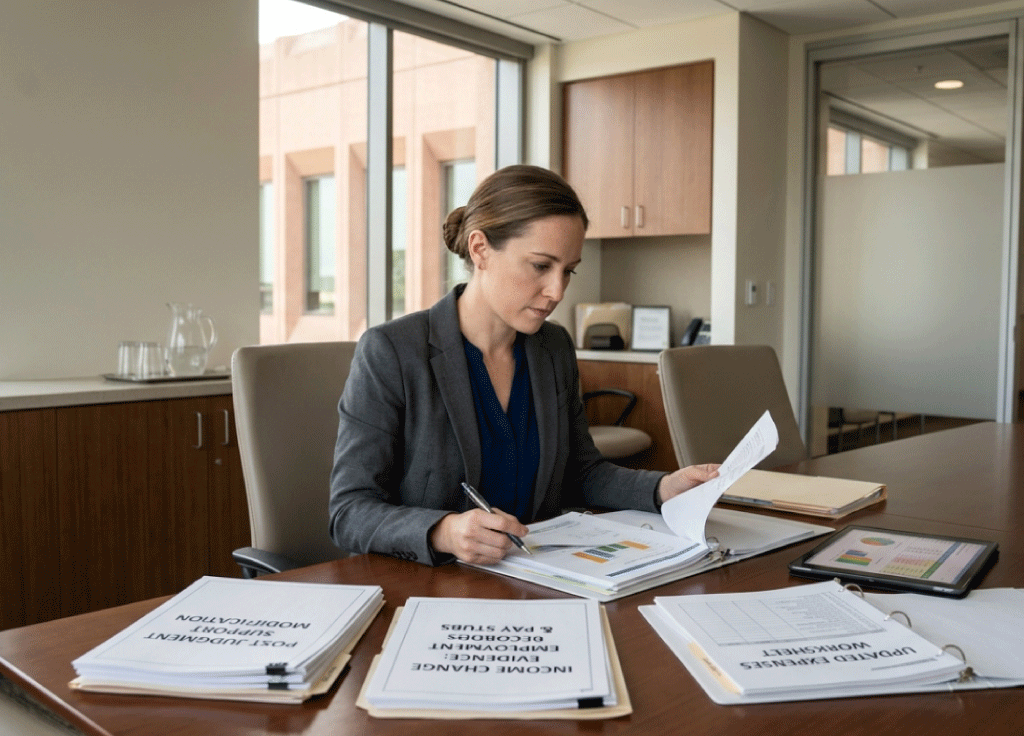
Modification of Alameda County Spousal Support Orders
Spousal support does not freeze in time. California law allows modification upon a material change in circumstances. Job loss. Promotion. Disability. Retirement. Cohabitation. Each may justify review.
The California Courts Self-Help Guide explains that post-judgment support can change when circumstances shift significantly. (See selfhelp.courts.ca.gov/spousal-support/longterm.)
Timing matters. Courts cannot modify retroactively before the filing date of a request for order. Delay costs money. Prompt action protects financial stability.
Alameda County judges require proof of change. Assertions alone do not suffice. Updated financial documentation and employment records carry weight.
Enforcement: Court Orders Carry Consequences
- Garnish wages
- Intercept tax refunds
- Suspend driver’s or professional licenses
- Impose contempt sanctions
- Accrue interest at 10% annually on unpaid balances
(See California Courts Self-Help Guide: Paying or Collecting Spousal Support.)
Arrears accumulate quickly. Interest compounds. Enforcement actions move faster than most expect.
Strategic defense or proactive compliance planning often prevents escalation. Knowledge of local enforcement patterns matters in Alameda County.


Common Disputes in Alameda County Spousal Support Cases
Certain issues arise repeatedly in local courtrooms:
Bonus and stock compensation. Technology and biotech employers frequently structure compensation with RSUs, stock grants, or performance bonuses. Courts examine historical averages. Counsel must present clear vesting schedules and payout timelines.
Imputed income. If a spouse remains underemployed despite earning capacity, courts may assign income based on vocational evaluation. Judges in Alameda County scrutinize good-faith job search efforts.
Marital standard of living disputes. Parties often disagree about lifestyle during marriage. Bank records, credit card statements, and tax returns reveal the truth.
Cohabitation under Family Code §4323. When a supported spouse cohabits with a new partner, a rebuttable presumption of reduced need arises. Evidence of shared expenses becomes central.
Each issue demands tailored strategy. Generalized arguments fail under judicial questioning.
The Importance of Early Strategy
- Financial modeling before filing
- Scenario analysis under guideline and §4320 factors
- Anticipation of opposing arguments
- Structured negotiation strategies
Why an Alameda County Spousal Support Attorney Makes a Difference
- How departments treat bonus income
- When courts order vocational evaluations
- How long hearings typically run
- What documentation persuades
Warren Major LLP: Focused. Prepared. Relentless.
- Direct attorney involvement
- Comprehensive financial review
- Clear strategic planning
- Court-ready preparation

What Our Clients Say

 Dave Benz
Trustindex verifies that the original source of the review is Google.
Marissa is very attentive and through. She has served me both as my attorney in one family law case and then as a legal advisor in a second matter that was resolved pro se. I highly recommend her. Ian ChaseI highly recommend Warren Major LLP to anyone seeking expert family law advice paired with personalized attention. Warren Major LLP is the ideal firm for anyone seeking a trusted family law advocate that gets results in such a challenging field.
 Clara PorterI highly recommend Warren Major LLP. Their approach is smart, professional, and attentive to the individual needs of their clients. Both Marissa and Hillary have impressive academic backgrounds, but more importantly, they have the requiste skill and years of experience necessary to advocate zealously for their clients and achieve successful results, time and time again.
 Nancy MajorVery competent and experienced. I highly recommend them.
 scott jensenMarissa Major was instrumental in setting strategy, aligning long term interests and keeping the focus on critical issues to a successful resolution of a very challenging divorce. I am indebted to her legal mind, fierce protection of her client and relentless support of the best outcome for me and my child.
 Casa CaliforniaExcellent service from Major Warren LLP! Very professional and well priced. Would highly recommend for your legal needs.
 Cata Atria AWe had a great experience with Warren Major LLP. We felt supported, listened to, and respected. They are as professional as they are kind, and this was really important to us. Thank you for all you did for us.
Take Control of the Financial Narrative
Support litigation rewards clarity. Courts respond to organized facts and credible financial presentations. Confusion benefits no one.
Alameda County spousal support cases demand structure, evidence, and command of local procedure. Warren Major LLP delivers each.
Schedule a consultation. Build a plan grounded in law, numbers, and courtroom reality. Secure informed representation from an Alameda County spousal support attorney who understands how this county works—and how to win within it.