

Contra Costa County Mediation Attorney
Warren Major LLP — Strategic Mediation for Family Law Disputes
Mediation helps families resolve divorce, custody, support, and property issues without years of courtroom conflict. It empowers both parties to find durable solutions while preserving privacy, reducing cost, and keeping decision-making in your hands.
At Warren Major LLP, we provide focused, senior-led mediation advocacy in Contra Costa County. We accept a limited number of mediation matters so every client receives strategic preparation, thoughtful negotiation, and customized legal guidance.
Whether your situation involves divorce, financial division, child custody, or support negotiations, mediation can offer a path that respects your goals and your family’s future.


What Is Family Law Mediation?
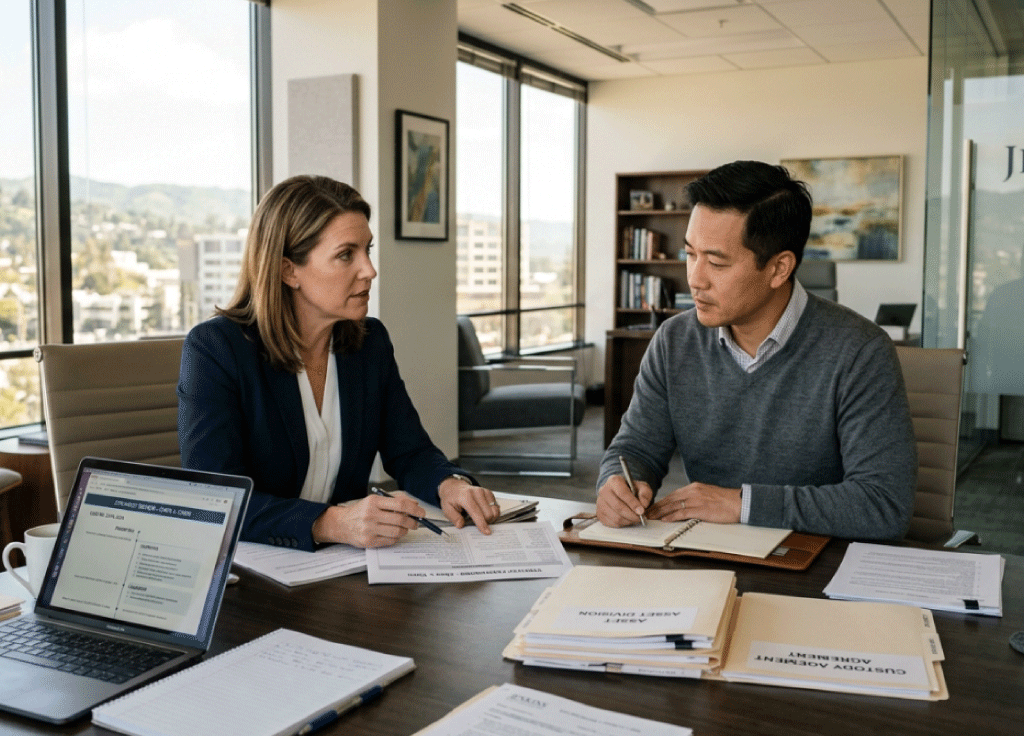
Mediation is a voluntary, confidential process in which a neutral mediator helps spouses or parents resolve disputes outside the courtroom. Instead of a judge imposing terms, parties work together to craft agreements with legal guidance.
The Judicial Branch of California recognizes mediation as a key alternative dispute resolution method in family law because it can reduce conflict and improve compliance with agreements.
- Divorce settlement terms
- Property division
- Spousal support
- Child custody
- Child support
- Parenting plans
- Retirement and business interests
Why Mediation Works Better in Many Cases
Control Over Outcomes
Faster Resolution
Cost Efficiency
Confidential and Private
Reduced Stress
Custom Solutions
How Mediation Fits in the Contra Costa County Divorce Framework
In Contra Costa County, family courts encourage the use of mediation for divorce and custody cases to streamline resolution and reduce unnecessary court conflict.
Most family law matters begin with case filing and financial/custody disclosures. After initial steps, courts often require mediation orientation or mediation sessions before contested hearings, particularly for custody and child support disputes.
Mediation does not remove your access to court — it enhances your negotiating position and often focuses issues so that any remaining legal steps are clearer and more efficient.


The Mediation Process With Warren Major LLP
At Warren Major LLP, we structure mediation with clarity and authority:
Assessment and Planning
We meet privately to identify issues, clarify priorities, and understand legal implications. This initial strategy session ensures mediation sessions are focused and productive.
Prepare Financial and Custody Information
We gather financial disclosures, custody facts, and relevant documentation so negotiations rest on facts rather than assumptions.
Facilitation and Negotiation
Mediation sessions provide a neutral setting where you and the other party negotiate terms. Our role is to guide discussions strategically, manage impasses, and help frame options that work for both sides.
Drafting Comprehensive Agreements
Once terms are reached, we help draft settlement agreements that cover all relevant issues in clear, enforceable language.
Court Submission and Enforcement
Your mediated agreement can be presented to the court for approval and become part of the final divorce judgment, custody order, or support decree. Mediation is not binding until both parties sign and the court enters the agreement as an enforceable order.
Contra Costa County Mediation Focus Areas
Divorce Mediation
Child Custody and Parenting Plans
Child Support and Custody Integration
Spousal Support Agreements
High Asset Divorce Mediation
Who Benefits Most From Mediation?
- Value privacy over public hearings
- Want to control outcomes rather than leave decisions to a judge
- Want to reduce legal fees and time
- Are willing to engage in solution-focused discussions
- Prefer collaborative methods but keep legal counsel
- Are navigating co-parenting structures
- Face complex financial or asset divisions
When Mediation Is Not the Best Option
- One party refuses to participate in good faith
- There is ongoing domestic violence or safety concerns
- There is a significant power imbalance
- Forced disclosure isn’t forthcoming
In these situations, legal counsel shifts toward protective measures and litigation preparedness.
At Warren Major LLP, we advise on the best intervention path — whether mediation, negotiation, or court advocacy — based on case specifics.
Common Misconceptions About Mediation
Mediation means weakness.
Wrong. Mediation requires discipline, preparation, and strategic clarity. Parties who negotiate from knowledge tend to secure stronger terms than those who default to litigation.
Mediation is only for amicable couples.
Not true. Even contested cases benefit from structured negotiation that narrows issues and reduces needless legal conflict.
You lose rights in mediation.
No. Mediation preserves your legal rights — and often strengthens your ability to control outcomes compared to a judge’s decision.

How to Prepare for Mediation
- Organize financial records (tax returns, pay stubs, asset statements)
- Clarify custody and caregiving realities
- Identify priorities and acceptable compromises
- Understand statutory standards for support and custody
- Work with your attorney on realistic negotiation positions
The Value of Skilled Mediation Advocacy
- Legal standards are understood
- Statutory benchmarks for support and custody are respected
- Documented agreements withstand court scrutiny
- Long-term consequences are anticipated
- Creative options meet legal enforceability

Why Choose Warren Major LLP
Warren Major LLP stands apart for:
Direct Senior-Attorney Engagement
You work with experienced counsel — not pass-off to associates or paralegals.
Boutique Focus and Selectivity
We limit the cases we accept so each client receives focused energy, strategy, and preparation.
Strategic Negotiation and Mediation Expertise
We navigate both cooperative and contested contexts with discipline and foresight.
Local Contra Costa County Insight
We understand local court procedures, mediator expectations, and county dynamics.
Holistic Approach
We balance legal strategy with emotional intelligence and real-world practicality.
What Our Clients Say
Trustindex verifies that the original source of the review is Google. Marissa is very attentive and through. She has served me both as my attorney in one family law case and then as a legal advisor in a second matter that was resolved pro se. I highly recommend her.Trustindex verifies that the original source of the review is Google. I highly recommend Warren Major LLP to anyone seeking expert family law advice paired with personalized attention. Warren Major LLP is the ideal firm for anyone seeking a trusted family law advocate that gets results in such a challenging field.Trustindex verifies that the original source of the review is Google. I highly recommend Warren Major LLP. Their approach is smart, professional, and attentive to the individual needs of their clients. Both Marissa and Hillary have impressive academic backgrounds, but more importantly, they have the requiste skill and years of experience necessary to advocate zealously for their clients and achieve successful results, time and time again.Trustindex verifies that the original source of the review is Google. Very competent and experienced. I highly recommend them.Trustindex verifies that the original source of the review is Google. Marissa Major was instrumental in setting strategy, aligning long term interests and keeping the focus on critical issues to a successful resolution of a very challenging divorce. I am indebted to her legal mind, fierce protection of her client and relentless support of the best outcome for me and my child.Trustindex verifies that the original source of the review is Google. Excellent service from Major Warren LLP! Very professional and well priced. Would highly recommend for your legal needs.Trustindex verifies that the original source of the review is Google. We had a great experience with Warren Major LLP. We felt supported, listened to, and respected. They are as professional as they are kind, and this was really important to us. Thank you for all you did for us.
Frequently Asked Questions
Is mediation legally binding?
Not until both parties sign a mediated agreement and the court approves it. Mediation itself remains voluntary.
Is mediation confidential?
Do I still need an attorney in mediation?
What issues can mediation resolve?
What happens if mediation fails?
Marin county family law Blog
Narcissism and Divorce in California: A Deeper Legal and Practical Guide
Are you Divorcing a Narcissist? Divorce is rarely simple. But when one spouse exhibits strong narcissistic traits, the process can become uniquely challenging—emotionally, financially, and

Complex Divorce in San Francisco
Complex Divorce in San Francisco: A Strategic Guide for Business Owners, Executives & Professionals Warren Major LLP | Boutique Family Law Firm | San Francisco

Preparing for a Divorce When You Have Children
Plan for Your Divorce With Children Having children often makes a divorce much more complicated and emotional. Many people stay in bad marriages to avoid

How to Divorce a Narcissistic Husband–A Full Guide.
Divorcing a Narcissistic Husband Many clients contact us with questions about divorcing a narcissistic husband. Is your husband a narcissist or does he suffer from
Schedule a Confidential Mediation Consultation
Choosing mediation does not mean avoiding conflict. It means structuring resolution with clarity, strategy, and purpose.
If you are considering mediation in Contra Costa County — for divorce, custody, support, or financial settlement — contact Warren Major LLP for a confidential consultation.
Your solutions should reflect your life, not a judge’s default assumption.
Work with a mediation attorney who understands law, family dynamics, and strategic resolution.